Food Stories
Corn Tortillas
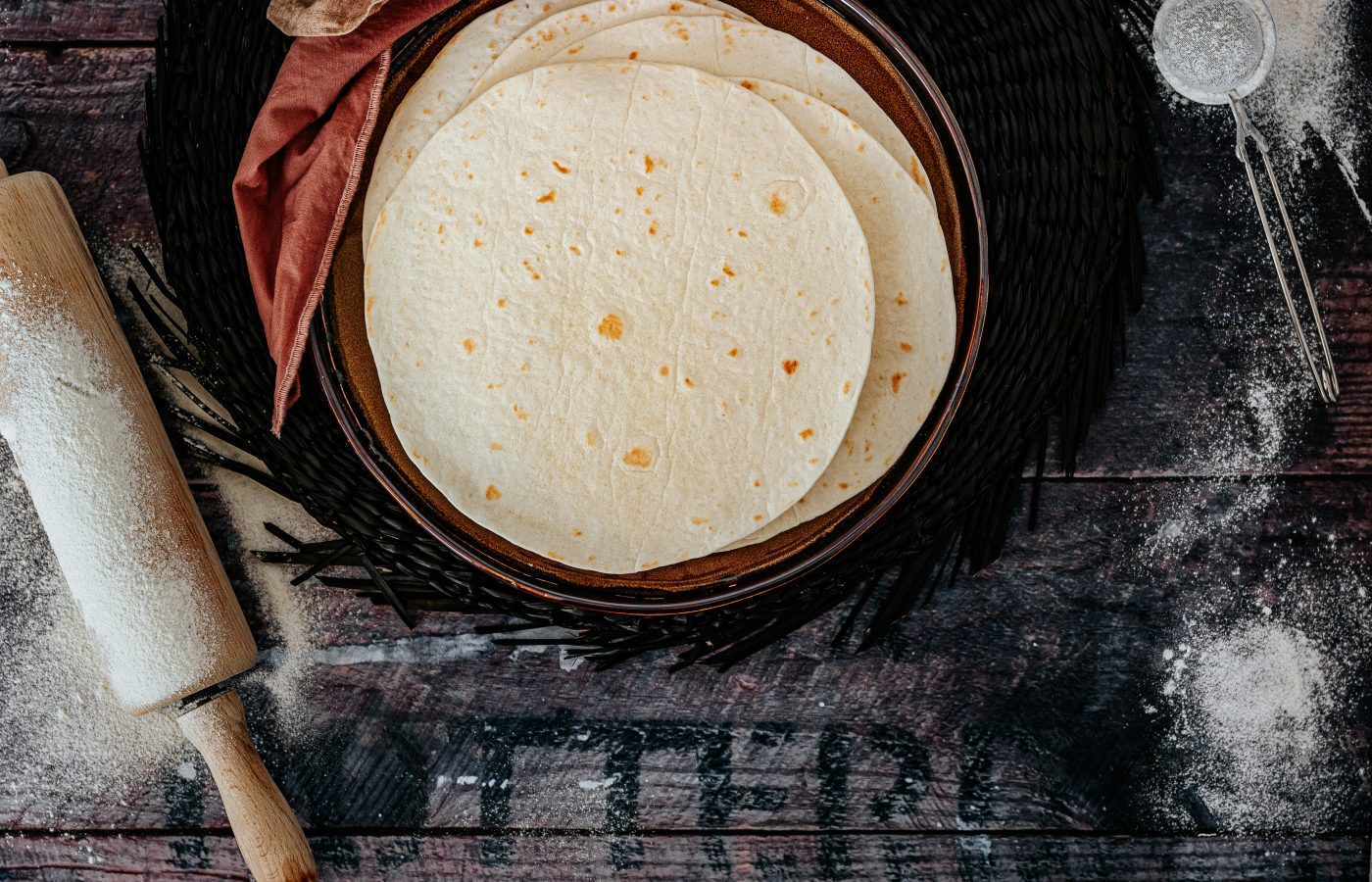
They look incredibly simple: corn, water and a little salt. But the tortilla underneath our carnitas carries thousands of years of farming, chemistry and food history.
🌽 Maize · 🇲🇽 Mexico · 🧪 Ancient food science · 🌮 Taco essential
🕵️ Ingredient Detective · Kombu
What exactly is a corn tortilla?
A traditional corn tortilla is a thin, round flatbread made principally from maize. But there’s a trick: you can’t simply grind ordinary dried sweetcorn, add water and expect the same tortilla. Traditional tortillas are made from maize that has undergone a special process called nixtamalisation — a very big word for a very old piece of kitchen science. We’ll investigate it in a moment. First, we need to meet the plant.
🌱 Plant Explorer · Kombu
Is corn a vegetable?
That depends what we mean by corn. The plant we call maize or corn is Zea mays, and botanically it belongs to the grass family, Poaceae — which makes maize a relative of wheat, rice, barley, oats and rye. Each individual corn kernel is actually a type of fruit containing a seed, called a caryopsis. So the yellow kernels on your corn cob aren’t little vegetables stuck onto a stick — they’re part of the plant’s reproductive system.
Plant detective: look closely at an ear of corn. Can you find where each strand of corn silk connects to an individual kernel? There’s a reason for that.

🌽 Kitchen Science · Nori
What does the corn silk actually do?
Each strand of silk is connected to the ovary that can develop into one kernel. Pollen lands on the silk and grows a pollen tube down towards the ovule, and if fertilisation is successful, a kernel can develop. That means a cob of hundreds of kernels required hundreds of successful fertilisation events. Suddenly those annoying silky threads look rather more impressive.
🌎 Geography Stop · Bamboo & Twig
Where did maize come from?
Maize was domesticated by Indigenous peoples in what is now Mexico thousands of years ago — and its wild ancestor looked very different. Meet teosinte: a wild grass native to Mexico and Central America, with seed structures much smaller and harder than the enormous corn cobs we recognise today.
Over many generations, people repeatedly selected plants with useful characteristics and saved their seeds. Gradually, human selection transformed the crop. So the giant ear of sweetcorn in a supermarket isn’t simply something humans found growing like that — people helped create it.
🧬 Science Stop · Nori
Humans changed maize without laboratories
Long before anyone knew what DNA was, farmers understood something enormously important: save seeds from plants with the characteristics you want. If plants produced bigger ears, useful kernels or better harvests, people could choose those plants for the next generation. Repeated over centuries and millennia, artificial selection can dramatically change a species. That’s evolution influenced by humans.
Evolution detective: find a picture of teosinte and compare it with modern maize. What differences can you identify? Which characteristics do you think ancient farmers might have selected?
🧠 Food History · Bamboo & Twig
How old is our taco ingredient?
People in Mexico began domesticating maize roughly 9,000 years ago — thousands of years before the Aztec Empire and long before Europeans reached the Americas. Maize eventually became central to many societies across Mesoamerica and beyond. It wasn’t merely another ingredient; it was a major staple crop supporting communities and civilisations. So when we eat a corn tortilla, we’re eating the modern descendant of an extraordinarily long relationship between people and plants.
🧪 Kitchen Science · Nori
Now for the clever bit: nixtamalisation
Imagine you have dried maize kernels. Instead of simply grinding them, you cook and soak them in alkaline water — traditionally made using calcium hydroxide, often called cal or food-grade lime. After soaking, the maize is washed. The treated kernels are called nixtamal, which can then be ground into a soft dough called masa. Shape the masa into thin rounds, cook them on a hot surface, and we have corn tortillas.
Maize → nixtamal → masa → tortilla. Simple ingredients. Very clever process.
⚗️ Kitchen Science · Nori
Why bother?
Nixtamalisation changes the maize in several useful ways. It changes the structure of the outer parts of the kernel, making the maize easier to process into dough; it changes flavour and aroma; and it can add calcium when calcium hydroxide is used. Something particularly important also happens nutritionally: maize contains vitamin B3 compounds, but some of its niacin isn’t readily available to our bodies — and alkaline processing increases how much of it we can actually use.
So this ancient technique wasn’t merely useful for making a tortilla. It changed the food’s nutritional properties. People were doing sophisticated food chemistry thousands of years before anyone could explain the molecules involved.
🧩 History Mystery · Bamboo & Twig
What happened when maize travelled without its cooking method?
After Europeans reached the Americas, maize spread around the world — but an important piece of knowledge didn’t always travel with it: nixtamalisation. In populations that came to depend heavily on untreated maize while eating diets poor in other sources of niacin and tryptophan, a deficiency disease called pellagra became a serious problem.
So this is an extraordinary lesson in food history. Moving a crop without moving the knowledge surrounding it can have consequences. Food isn’t just ingredients — it’s accumulated human knowledge.
🗣️ Language Stop · Bamboo & Twig
Corn or maize?
The word maize comes into European languages from an Indigenous Caribbean word, commonly traced through the Spanish maíz. The word corn is more complicated: historically in English, “corn” could simply mean the most important local cereal grain — in England that might mean wheat, in Scotland oats, and in North America maize became “corn.” That’s why scientists and much of the world use maize when they specifically mean Zea mays. One plant, different words — another little piece of history hiding in our lunch.
🌍 Around the world with maize
Maize began its domesticated story in Mexico, but today it’s grown and eaten across much of the world.
- In Mexico, maize becomes tortillas, tamales and many other foods.
- Across Central America, maize is central to numerous traditional cuisines.
- In parts of South America, different maize varieties appear in drinks, breads, stews and snacks.
- Across Africa, maize is an important staple, prepared as porridges and stiff doughs.
- In Italy, ground maize gives us polenta.
- In the United States, maize appears as everything from cornbread and grits to popcorn and cornflakes.
One domesticated grass has become hundreds of different foods.
🧺 Market Mission · Kombu
Can you find the right tortilla?
Next time you’re shopping, investigate the tortilla shelf. Look for 🌽 corn tortillas, 🌾 wheat-flour tortillas and 🌽🌾 mixed corn-and-wheat tortillas. Read the ingredient lists — do the corn ones mention maize flour, masa harina, nixtamalised corn, or lime / calcium hydroxide? Then compare with a flour tortilla. They may both be called tortillas, but they’re not the same food.
👅 Taste like a cook
Corn tortilla vs flour tortilla
If you can find both, warm one corn tortilla and one wheat tortilla — don’t add fillings yet. Smell them. Bend them. Pull a tiny piece from each and taste slowly. Ask: which has the stronger aroma? Which is softer? Which tastes more strongly of its grain? Which tears more easily? Which would you choose for our carnitas?
There isn’t a correct winner — you’re learning to compare ingredients deliberately.
🔥 Kitchen Science · Nori
Why warm tortillas?
A cold tortilla straight from a packet can be stiff and disappointing. Heating changes how the tortilla’s starch and moisture behave and releases more aroma — which is why a warm tortilla can smell, bend and taste different from the same tortilla eaten cold. Try it: take one tortilla cold, warm another, and compare. Sometimes one tiny cooking step completely changes an ingredient.
🌮 Where we met corn tortillas
We met our corn tortillas while making Slow-Cooker Orange Carnitas. The pork gave us slow-cooking chemistry, the orange took us into citrus, and the tortilla underneath everything has now taken us back thousands of years to the first farmers transforming a Mexican wild grass. That’s quite a journey for something small enough to hold in one hand.
🔬 Kombu’s Investigation
Can you trace a tortilla backwards?
Start with a 🌮 tortilla, then work backwards through its whole story:
Tortilla → Masa → Nixtamal → Dried maize → Maize plant → Thousands of years of domestication → Teosinte
Draw the chain in your expedition notebook. Now add one thing humans do at each stage. How many different kinds of knowledge are hidden inside one tortilla?
⭐ Ingredient badges
🧾 Your ingredient log
- Corn tortillas taste like: ______________
- The scientific name of maize is: ______________
- Maize’s wild ancestor is: ______________
- Nixtamalisation means: ______________
- Nixtamalised maize dough is called: ______________
- The coolest thing I learned was: ______________
- Next I’d like to investigate: ______________
🚀 Where does our ingredient travel next?
Our tortilla has opened several new paths. We could investigate teosinte and how humans domesticated plants, make tortillas from masa harina, explore the Indigenous food cultures of Mexico, or follow maize as it travels around the world. And sitting on top of our carnitas is another clue: 🌽 sweetcorn — same species, very different ingredient.
Next mini-adventure: Sweetcorn Relish


